



Market Growth Is Not an Investment Thesis
Demand is expanding, sovereign governments are investing, and a new generation of constellations is taking shape. But a bigger satellite market does not necessarily mean better returns for those financing it.
In 2022, Three Horizon Advisors raised the possibility of “Satellite Bankruptcy 3.0”. We questioned whether another wave of satellite investment would generate attractive returns or repeat earlier cycles of overbuilding and financial distress. Our 2023 follow-up examined the addressable market for residential broadband, mobile coverage, aviation, and maritime connectivity.
Four years later, the industry presents a paradox. Starlink reported $5.25 billion in quarterly connectivity revenue and 13.6 million consumer service lines worldwide in Q3 2026. Hughes Satellite Systems entered Chapter 11 in August. Established operators have combined networks, while major technology companies and start-ups are committing fresh capital to space-based connectivity.
Recent conversations with clients and industry executives prompted our team at Three Horizon Advisors to revisit the data and business models behind the headlines.
The evidence has changed. Demand is broader and some applications are growing considerably faster than expected. But the central investment question remains: how many networks can convert that demand into durable cash flows after paying to build, operate, and continually replace satellites?
1. Five developments have changed the industry
🚀 Starlink has proven commercial scale. It has moved well beyond remote residential broadband into aviation, maritime, enterprise, and government connectivity. Its latest Q3 results include $2.13 billion from enterprise and government customers.
🛡️ Defense demand has expanded sharply. Drone warfare, electronic warfare, mobile command networks, and satellite backhaul have become central operational requirements. Ukraine’s president reports annual production of 10 million drones, and Taiwan has targeted production capacity above 100,000 drones per month by 2030. Not every drone needs satellite connectivity: many use local radio or fiber-optic control. The satellite opportunity is in the broader resilient network.
🌍 Sovereignty has become a procurement criterion. Governments are willing to pay for control, assured capacity, and independence from a single foreign-owned network.
📡 Spectrum has become strategic capital. SpaceX’s roughly $19.6 billion EchoStar spectrum transaction and Amazon’s proposed acquisition of Globalstar show that licenses, handset compatibility, and market access can be as consequential as spacecraft.
🔁 The industry is consolidating and proliferating at once. SES/Intelsat, Viasat/Inmarsat, and Eutelsat/OneWeb illustrate consolidation among established networks; new architectures continue to attract funding.
These shifts make it less useful than ever to talk about a single satellite communications market.
2. There are six satellite businesses, with different economics
We would segment the industry by what the customer purchases, not by orbit or frequency band. That produces six revenue pools. Individual operators may serve several, but the economics of each are different.
📺 Broadcast and video: Broadcasters and pay-TV distributors buy contracted capacity. This remains important to GEO operators but is a mature, declining market. According to Eutelsat’s FY2025–26 results, its video revenue fell to €519 million, down 13.1% on a comparable basis, even as its LEO business grew 69.5%.
🏠 Consumer broadband: Households pay for internet access and equipment. Affordability, competing terrestrial coverage, customer acquisition, and geographic utilization determine returns.
📱 Direct-to-device (D2D): Satellite connectivity extends ordinary mobile service. The relevant economics are active usage, incremental willingness to pay, wholesale terms, and the share retained by mobile operators and device platforms.
✈️ Enterprise, aviation, maritime, and private networks: Customers buy contracted throughput, managed service, redundancy, or service-level guarantees. A single aircraft, vessel, or critical enterprise site may be worth far more than many residential users.
🛡️ Defense and sovereign communications: Governments pay for mission assurance, capacity, resilience, and control. Financial returns may be underwritten by long-term contracts or national security priorities rather than consumer utilization.
📦 Satellite IoT: Operators monetize tracking, telemetry, and monitoring through low-cost connections or messages. Large endpoint counts can coexist with modest revenue per device.
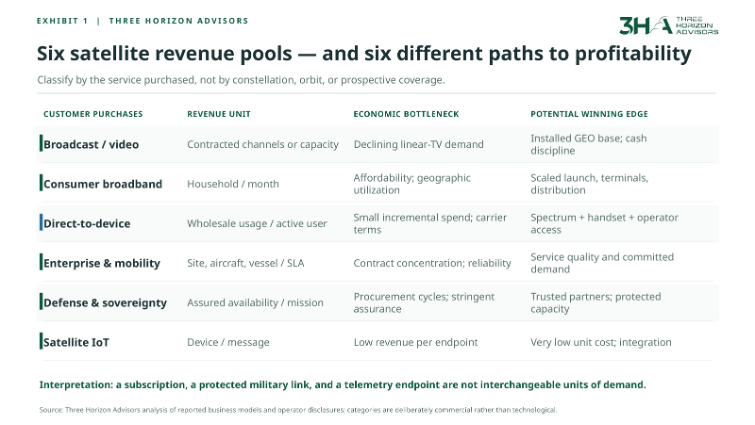
Figure 1: Commercial segmentation framework
One useful example of changing economics is aviation. BCG’s May 2026 SatCom analysis suggests global in-flight connectivity penetration could exceed 50% within a decade. SpaceX already reports more than 3,800 Starlink-equipped aircraft. Airlines can justify spending on passenger experience, crew operations, and a service standard that has become increasingly expected. That is not the same willingness-to-pay curve as a low-income household purchasing broadband.
The lesson is not simply that satellite has multiple uses. It is that the same dollar of forecast revenue can require radically different capacity, distribution, service guarantees, and capital commitments.
3. Starlink has proven the market — not the ability to replicate its economics
The latest SpaceX filing shows $5.25 billion in Q3 connectivity revenue, $2.37 billion in segment operating income, and 13.6 million consumer service lines. That is an extraordinary achievement, especially when combined with the enterprise and government business.
But three qualifications matter to anyone planning to follow.
First, global customers do not have global purchasing power. Starlink’s reported global consumer ARPU declined from $83 to $69 in one year as it expanded internationally and offered lower-price plans. The important point is not the direction of ARPU by itself; it is the much smaller addressable base at profitable prices in many emerging economies. A global footprint is not a global pool of equally valuable subscribers.
Second, the first mover has unusually favorable economics. Starlink captured customers with the greatest need for an alternative to terrestrial service. SpaceX also controls much of the satellite manufacturing, launch, terminals, and network software stack. A competitor cannot assume the same acquisition costs, customer mix, or launch costs.
Third, spare capacity can make competition asymmetrical. A satellite moves over markets with widely varying demand. Once the network is in place, discounting otherwise unused capacity can be rational for the incumbent. A newcomer must finance the infrastructure before it has that flexibility.
That does not make the market winner-take-all. In fact, vertical integration can be a drawback for some buyers. Governments, telecom carriers, and enterprises may prefer an independent second network for negotiating leverage, resilience, or sovereignty. Their requirement is not necessarily another Starlink; it may be a different provider with contracted performance and trusted governance.
4. Spectrum could determine who controls the next profit pool
Two major transactions underscore the point. SpaceX agreed to acquire approximately $19.6 billion of EchoStar spectrum rights, while Amazon agreed to acquire Globalstar in a deal valued at approximately $11 billion in equity. Both transactions are subject to applicable closing conditions and involve different mixes of spectrum, operations, and strategic relationships.
SpaceX also agreed to acquire Grain Management’s nationwide 800 MHz spectrum portfolio, extending its options for integrating terrestrial and satellite mobile connectivity. The low-band spectrum offers valuable coverage and indoor penetration, although it does not, by itself, solve the capacity requirements or economics of building a nationwide terrestrial mobile network.
Why spend so much on assets related to a service that may generate only modest incremental revenue per mobile subscriber?
Because spectrum, device support, and distribution determine who is allowed to provide the service, on which handsets, and under whose commercial terms. SpaceX is building a path toward greater independence from terrestrial carriers; Amazon is combining a constellation with licensed spectrum and an established relationship with Apple.
Meanwhile, terrestrial operators are organizing. AT&T, T-Mobile, and Verizon launched a U.S. joint venture in October to coordinate a more open approach to satellite-enabled coverage. Deutsche Telekom, Orange, Telefónica, and Vodafone announced plans to explore a joint European MSS-spectrum bid and explicitly said they do not intend to finance the constellation themselves.
This creates a genuine strategic tension. Carriers want satellite coverage as part of their service, while satellite companies want enough independence to capture attractive economics. Standards-based integration firms may find opportunities between the two.
Our expectation: D2D adoption will grow faster than the standalone revenue that satellite investors initially imagine. The distribution and spectrum arrangements will determine where the margin lands.
5. Sovereignty changes the investment calculus
The war in Ukraine has made the value of resilient communications tangible. Recent restrictions on Starlink and Starshield operating speeds disrupted some Ukrainian military drone operations for more than a week; Ukraine’s defense ministry reported that higher-speed connectivity had been restored on October 24. The episode exposed the vulnerability of depending on communications infrastructure controlled outside a country’s borders.
Europe’s IRIS² program, government support for Eutelsat/OneWeb, and national initiatives elsewhere respond to that concern. Canada offers a particularly concrete example: its government awarded Telesat Lightspeed an initial C$2.3 billion defense communications contract, supporting additional satellites and secure Arctic coverage.
Sovereignty does not mean every country needs a duplicate global constellation. Trusted foreign capacity, dedicated military capabilities, sovereign ground control, encryption, and shared allied systems can provide much of the required independence.
There are two very different economic outcomes:
✅ Buy capacity from existing systems: Greater contracted demand and utilization could improve industry returns.
⚠️ Subsidize parallel constellations: The country may gain strategic resilience, but additional capacity can push commercial prices and returns lower.
Both responses may be rational from a national security perspective. Only one necessarily improves the economics of the existing industry.
6. A more crowded field — but not everyone is playing the same game
Rather than evaluate twenty companies one by one, it helps to distinguish five operating models.
🌐 Vertically integrated global platforms: Starlink and Amazon Leo, with Blue Origin’s TeraWave developing a separate enterprise-oriented proposition. Their differentiator is access to industrial capabilities and long-duration funding, not merely a satellite design.
🛰️ Established multi-orbit networks: SES/Intelsat, Viasat/Inmarsat, Eutelsat/OneWeb, and Telesat. These companies bring customers, distribution, spectrum, and government relationships but also inherited assets, financial obligations, and the challenge of moving from legacy GEO economics toward new networks.
📱 D2D network specialists: AST SpaceMobile and Lynk Global, among others. AST’s August 2026 update reported relationships with 60-plus MNOs serving more than three billion subscribers and approximately $1.3 billion in contracted commercial and government revenue backlog. The subscriber number represents partner reach, not paying satellite users; the backlog offers a more useful indication of commercial commitments.
🔐 Secure enterprise / specialist constellations: Rivada Space Networks, Logos Space, and E-Space are pursuing very different combinations of enterprise security, private transport, and specialized connectivity. Technical differentiation can create a niche, but only committed customers can underwrite deployment at scale.
📦 IoT and enablement platforms: Sateliot and other specialist systems pursue low-bandwidth and standards-based uses. Skylo is an important different archetype: an integration and NTN service-enablement provider using partner satellite infrastructure rather than building its own global constellation.
Global network coverage does not automatically translate into global commercial reach. Enterprise and government markets require customer relationships, specialized sales capabilities, channel partners, and often country-specific contracting expertise. For new entrants, building that distribution capability can be almost as challenging as deploying the network itself.
China’s Guowang and Qianfan/Spacesail initiatives also matter. As the OECD’s industry review discusses, strategic and industrial objectives may make conventional Western venture-capital comparisons incomplete.
The more compelling smaller-company opportunities, in our view, will be those with protected or specialized demand, committed distribution, or a business model that avoids financing a full broadband constellation. Generic capacity is the least attractive place to compete.
7. The constellation must earn its replacement cost, not just launch successfully
Before forecasting subscribers, investors should ask what it costs to sustain the network after the first constellation is already in orbit.
Consider an illustrative 4,000-satellite LEO network:
🛰️ Fleet size: 4,000 satellites.
⏱️ Assumed useful life: five years, implying 800 replacements annually in steady state.
💵 Illustrative delivered replacement cost: $1.5 million per satellite, including manufacturing and launch, implying $1.2 billion in annual replacement spending.
🏗️ Illustrative ground and fixed network spending: another $400 million annually.
📊 Annual recurring cash burden: approximately $1.6 billion.
If the network earns a 50% cash contribution margin before replacement and fixed-network spending, it needs approximately $3.2 billion in annual service revenue merely to cover these recurring requirements. That excludes recovery of the original constellation investment, financing costs, taxes, terminal subsidies, and an adequate return on capital.
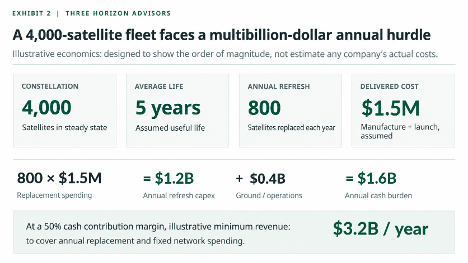
Figure 2: Illustrative constellation economics
The $1.5 million assumption is an illustrative midpoint rather than a universal industry benchmark. In its 2025 satellite industry analysis, Stifel estimated delivered costs of approximately $0.95 million for first-generation Starlink satellites and $1.8 million for second-generation Starlink satellites. More complex spacecraft can cost considerably more.
The conclusion is robust to a reasonable cost range. At $1 million delivered per satellite, the minimum annual revenue requirement falls to approximately $2.4 billion. At $2 million, it rises to $4.0 billion. These are illustrative scenarios, not forecasts for Starlink or any other operator. Useful lives, payload designs, operating margins, and replacement economics vary materially.
As a real-world point of scale, Telesat reported approximately C$2.8 billion invested in Lightspeed by June 2026, ahead of planned commercial operations in 2028.
Five questions become decisive: Is the demand genuinely monetizable? Are spectrum rights durable? Who owns distribution? How much capital is needed before and after launch? And how much contracted revenue is available before the network is fully built?
8. What we expect to see by 2030
We do not need to predict every winner to draw a few conclusions about how the industry is likely to develop.
1. Global consumer broadband will consolidate around very few scaled systems. Starlink has an enormous lead. Amazon Leo has a credible route to becoming another large platform. Other networks can coexist, but a new undifferentiated global consumer constellation is an exceptionally difficult investment thesis.
2. D2D will become a mainstream mobile-network feature before it becomes a comparably large standalone profit pool. Mobile operators, handset ecosystems, and spectrum holders will fight over how value is shared. SpaceX’s spectrum strategy is the most consequential challenge to the assumption that carriers will control the relationship indefinitely.
3. Government-backed networks will multiply, but not every sovereign system will need global commercial scale. Some will be justified by defense procurement rather than consumer returns. That supports selected suppliers while increasing the risk of overcapacity wherever government and commercial networks compete.
4. Aviation, secure enterprise connectivity, and specific defense missions can sustain differentiated alternatives. These are not necessarily small opportunities, but they reward assured performance, customer commitments, and trust more than headline constellation size.
5. More projects will be delayed, combined, or restructured than today’s constellation announcements suggest. The most credible survivors will secure anchor demand and a replenishment plan before promising universal coverage.
The bottom line
The satellite market is larger, more strategically important, and more commercially varied than it was when Three Horizon Advisors raised the prospect of “Satellite Bankruptcy 3.0” in 2022. But the old discipline still applies: market demand is not the same thing as an adequate return on infrastructure investment.
Our central expectation is not a collapse of satellite communications. It is a bifurcation: a few large global platforms, a set of defensible specialist and government-anchored networks, and a much longer list of projects that cannot earn their cost of capital.
Satellite Bankruptcy 3.0, if it arrives, will be less a verdict on satellite technology than a verdict on who funded too much capacity without enough paying demand.
This article forms the foundation of a seven-part series from Three Horizon Advisors examining satellite market structure, spectrum, competitive positioning, and investment economics. Explore the accompanying exhibits and follow our latest perspectives on Three Horizon Advisors’ LinkedIn page